
Waterloo Turf Franchise - FDD Diligence & Investment Considerations
Waterloo Turf began offering franchises in December 2024. What does the 2026 FDD outline and what diligence considerations are present based on FDD data?
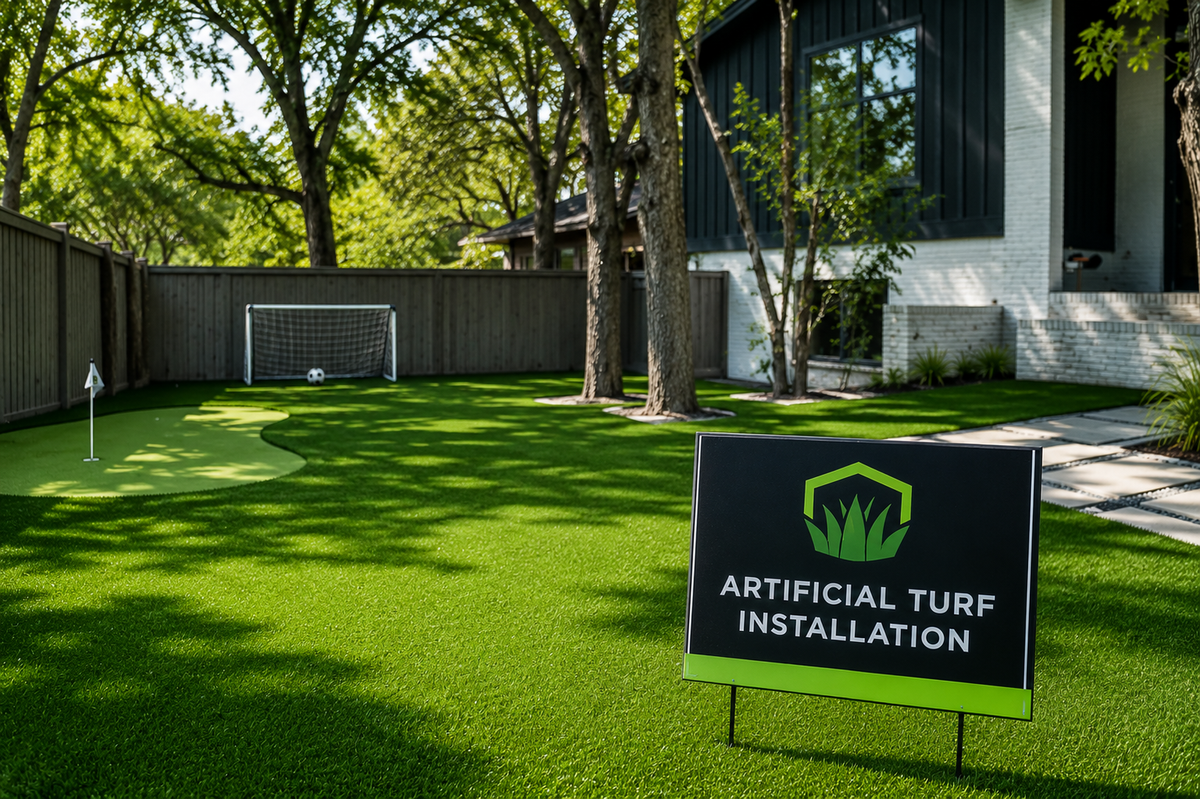
Waterloo Turf is an Austin, Texas franchise whose owners sell and install artificial turf, with optional landscaping and turf maintenance, out of a wrapped truck or van within an assigned territory. The franchisor, Waterloo Turf Franchising Co, LLC, began offering franchises in December 2024. What does the 2026 FDD outline and what diligence considerations are present based on FDD data?
Waterloo Turf | Home Services | latest FDD 2026 | 26 outlets | franchising 1 year
Reviewer Highlights
Create an account at Franchise Signal and ask diligence questions within your Claude workspace - all with the added FDD data (across multiple years) for your prospective brand(s). Download FDDs directly for additional research.
About the franchisor
The franchisor is Waterloo Turf Franchising Co, LLC, a Texas limited liability company formed on August 8, 2024 and based in Austin, Texas. It began offering franchises in December 2024 and, as of the 2026 FDD, has sold 94 franchises to 24 franchisees.
The franchisor does not own or operate any Waterloo Turf outlets itself. The brand traces to 2021, when founder Lance Ingram started Waterloo Turf as a sole proprietorship in Austin and later formed the affiliate Waterloo Turf, LLC, which owned the trademarks before assigning them to the franchisor in November 2024.
The franchisor's direct parent is Waterloo Turf Franchising, Inc., and its indirect parent is Trivium Franchise Holdings, LLC; Trivium Global is described as a private equity sponsor, and the franchisor's officers hold roles across other Trivium-affiliated franchise brands. The franchised business is a mobile, home-based model run from at least one wrapped truck or van within an assigned territory, selling and installing artificial turf and related products with optional landscaping and maintenance services.
The leadership team is tied to the Trivium franchise platform and was assembled around the 2024 formation. Tim Lovett has been Chief Executive Officer since the company was formed in August 2024; he was previously VP of Operations at ResiBrands and a Sales Director at WeWork, and is an Operating Partner at the private equity sponsor Trivium Global. Founder Lance Ingram, who built the Austin and San Antonio operations, serves as Founder. Dr. Ben Peays is Chief Financial Officer and concurrently serves as CFO of Stain and Seal Experts Franchising and was previously CEO of Summer Moon Franchising; he is also a Partner at Trivium Global. Taylor Blom joined as Vice President of Franchise Development in September 2025.
Growth and system health
Item 20 counts each territory as one outlet. Franchising started in December 2024, so the franchised count was 0 through 2023 and 2024, then 26 outlets opened in 2025, ending the year at 26 with no terminations, non-renewals, reacquisitions, or other closures recorded. Those 26 outlets were opened by 8 franchisees across Texas (16), Colorado (3), Tennessee (3), Arizona (2), and Idaho (2).
The 5 outlets the franchisor labels company-affiliated are the founder's Waterloo Turf, LLC locations in Texas, which the franchisor counts for disclosure but states it does not manage or operate. In the same first year, Item 20 records 5 transfers of franchised outlets to new owners in Texas.
Looking forward, the franchisor reports 18 franchise agreements signed but not yet opened and projects 18 new franchised outlets for 2026 in Colorado, Florida, Georgia, and Texas. Because every franchised outlet is under a year old, there is no closure or renewal history yet to judge durability.
| Year | Opened | Terminations | Non-renewals | Reacquired | Ceased | Outlets (end) |
|---|---|---|---|---|---|---|
| 2023 | 0 | 0 | 0 | 0 | 0 | 0 |
| 2024 | 0 | 0 | 0 | 0 | 0 | 0 |
| 2025 | 26 | 0 | 0 | 0 | 0 | 26 |
Item 20 records 5 transfers of franchised outlets to new owners in Texas in 2025, the first year franchised outlets existed, with none in 2023 or 2024 (when there were no franchised outlets). A transfer is an owner selling the outlet to someone else.
Five resales in the opening year, against 26 outlets, is worth asking about, because the FDD does not say why those outlets changed hands and the system is too new to have a resale market yet.
The franchisor owns and operates zero outlets. The 5 outlets shown as company-affiliated in Item 20 are the founder's Waterloo Turf, LLC locations in Austin and San Antonio, which the franchisor counts for disclosure purposes but states it does not have management or operational control over. So the operating system a buyer is joining is entirely franchised outlets opened in 2025, with the founder's affiliate units sitting alongside it rather than as company-run training stores.
Create an account at Franchise Signal and ask these types of questions within your Claude workspace - all with the added FDD data (across multiple years) for your prospective brand(s). Download FDDs directly for additional research.
As of December 31, 2025 the franchisor reported 18 franchise agreements signed but not yet opened and projected 18 new franchised outlets for 2026, in Colorado (3), Florida (5), Georgia (6), and Texas (4). Separately, Item 1 states 94 franchises have been sold to 24 franchisees, which reflects multi-unit development commitments. Much of the projected growth therefore rests with a small group of developers, and the signed-but-unopened count (18) is most of the size of the operating system (26).
What it costs to get in
Item 7 estimates a single franchise at $121,300 to $162,500, and the model is home-based, so it assumes no leasehold buildout beyond an optional small office. The largest single cost is the $59,000 franchise fee, which is reduced for additional outlets bought together ($49,000 for a second, $44,000 for a third, $39,000 for a fourth and beyond).
After that, the biggest entries are a $30,000 to $40,000 reserve of additional funds for the first three months, $18,500 to $19,500 for initial marketing materials plus the grand opening advertising, and an optional $0 to $13,000 to add the artificial turf maintenance line of business.
The estimate rose from $106,300 to $151,500 in the 2025 FDD, driven by a larger three-month reserve, higher initial marketing, and an Opening Support Fee that doubled from $2,000 to $4,000. The franchisor offers no financing of any kind (Item 10).
| Category | 2025 FDD | 2026 FDD |
|---|---|---|
| Franchise Fee | $59,000 | $59,000 |
| Leased Office | $0 to $500 | $0 to $500 |
| Vehicle Lease and Wrap | $2,500 to $6,000 | $2,500 to $6,000 |
| Installation Equipment and Office Equipment and Supplies | $1,550 to $6,500 | $1,550 to $6,500 |
| Initial Training Fees and Living Expenses | $3,000 to $5,500 | $3,000 to $5,500 |
| Opening Support Fee | $2,000 | $4,000 |
| Technology and Information Systems | $500 to $1,000 | $500 to $1,000 |
| Initial Marketing Materials; Marketing Development Fee; Grand Opening Ad | $15,500 to $16,500 | $18,500 to $19,500 |
| Insurance (3 Months) | $1,500 to $3,000 | $1,500 to $3,000 |
| Permits and Licenses | $250 to $2,000 | $250 to $2,000 |
| Professional Fees | $500 to $2,500 | $500 to $2,500 |
| Artificial Turf Maintenance Services Line of Business | $0 to $17,000 | $0 to $13,000 |
| Additional Funds (3 months) | $20,000 to $30,000 | $30,000 to $40,000 |
| TOTAL | $106,300 to $151,500 | $121,300 to $162,500 |
Ongoing fees
The recurring fees run on Gross Sales, not profit, so they are owed in a slow month. The core load is a 6% royalty plus a 2% National Brand Fund contribution (raisable to 3%) and a 3% Local Ad Expenditure you spend yourself (raisable to 5%), which together is about 11% of Gross Sales at current rates before the flat charges.
On top of that sit a $600 monthly Technology Fee (capped at $1,200 during the initial term) and roughly $1,000 a month in third-party ad agency fees. Two features stand out.
First, Gross Sales is defined broadly, as essentially all revenue from the business. Second, from Agreement Year 2 a Minimum Annual Royalty Fee applies: if your sales come in under the threshold ($250,000 in Year 2, $320,000 in Year 3, $400,000 in Year 4 and after), you pay the shortfall in royalty anyway, which puts a floor under what the franchisor collects regardless of how your outlet actually performs.
Prospective franchisees should keep in mind that royalties are based on revenue and costs for materials alone (before rental equipment, labor, etc) can run ~30%+.
| Fee | Amount |
|---|---|
| Initial franchise fee | $59k |
| Royalty | 6.0% of Gross Sales |
| Brand / ad fund | 2.0% of Gross Sales |
| Royalty Fee | 6% of Gross Sales per accounting period, subject to the Minimum Annual Royalty Fee floor; reduced on incremental sales above $1.5M (to 5.5%), $3M (5%), $5M (4.5%), and $10M (4%) |
| Minimum Annual Royalty Fee | From Agreement Year 2, if annualized Gross Sales fall below $250,000 (Year 2), $320,000 (Year 3), or $400,000 (Year 4 and after), you pay the difference in royalty so the franchisor receives what it would have at the minimum |
| National Brand Fund | Currently 2% of Gross Sales, may be raised to 3% |
| Local Ad Expenditure | Currently 3% of Gross Sales spent by you on approved local advertising, may be raised to 5% |
| Technology Fee | Currently $600 per month per outlet, capped at $1,200 per month during the initial term |
| Ad Agency Fees | Estimated $1,000 per month, set by a third-party agency |
| Grand Opening Ad Expenditure | Up to $10,000, spent within 90 days of opening |
| Transfer Fee | Greater of $10,000 or 20% of the then-current franchise fee, plus any broker or referral fees |
| Renewal Fee | Greater of $10,000 or 20% of the then-current franchise fee |
| Non-Compliance Fees | $1,000 to $4,000 per contractual deviation ($1,000 first, $2,000 first repeat, $4,000 thereafter) |
| Liquidated Damages (early termination) | Average Royalty Fee over the prior 12 months times the lesser of 24 or months remaining in the term |
Reported financial performance (Item 19)
Item 19 needs to be read carefully, because of where the numbers come from. The franchisor discloses three years of Gross Sales, cost, and net income, but only for the two outlets its founder's affiliate operates in Austin (open since 2021) and San Antonio (open since December 2023).
All 26 franchised outlets are excluded, because none had been open a full calendar year, so zero franchised outlets are represented in the sales and profit figures. The two affiliate outlets are also larger than a franchise territory: Austin serves about 893,770 people (around 2.55 of the 350,000-person prototype territory) and San Antonio about 670,770 people (around 1.92 territories). To make them comparable, the franchisor scales Gross Sales down to a single 350,000-person territory: Austin works out to about $425,104 (2023), $506,081 (2024), and $576,760 (2025), and San Antonio to about $385,960 (2024) and $736,413 (2025). Whole-outlet Gross Sales before scaling were higher, for example $1,470,739 for Austin and $1,413,913 for San Antonio in 2025. The franchisor then applies hypothetical 6% royalty, 2% brand fund, technology, and local-ad deductions these affiliate outlets never actually paid, plus add-backs, to estimate a franchisee-equivalent net income, which ran from about 13% to 22% of Gross Sales; that is a constructed figure, not audited franchised results, and it excludes some costs a real owner would carry.
The one franchised-outlet figure disclosed is timing, not money: across the 8 franchisees who opened the 26 outlets, the average time from signing to first dollar was 79 days (median 74.5, range 42 to 118).
Treat the per-territory lines below as directional results from two founder-run outlets, not as what a typical franchised outlet earns, and ask for an individual outlet's actual records before relying on any number.
| Gross Sales scaled to one 350,000-person territory | 2023 | 2024 | 2025 | Latest YoY |
|---|---|---|---|---|
| Austin (founder affiliate) | $425K | $506K | $577K | +14.0% |
| San Antonio (founder affiliate) | - | $386K | $736K | +90.8% |
Personal risk and the exit
The personal stakes are concrete. The Controlling Principal and designated owners personally guarantee the entity's obligations, so the $121,300 to $162,500 investment and the contract's fees do not stop at the business entity. The initial term is 10 years, with up to two 5-year successor terms if the franchisee qualifies, pays the Renewal Fee, upgrades, and signs the then-current agreement and a general release. The franchisor cannot terminate without cause, but it lists several non-curable defaults, including three events of default within 12 months and insolvency.
The franchisee can terminate only on an adverse change of law, so there is no general right to walk away. Exiting early without a contractual right triggers liquidated damages of up to 24 months of average royalty, roughly $48,000 at the minimum royalty basis and higher against the founder outlets' sales, and the non-compete as drafted reaches nationwide and worldwide during the term and two years within 25 miles afterward, subject to state law. Disputes are not arbitrated; they go to state or federal court in Austin, Texas under Texas law, subject to state-specific amendments.
Create an account at Franchise Signal and ask franchise research questions within your Claude workspace - all with the added FDD data (across multiple years) for your prospective brand(s). Download FDDs directly for additional research.
Litigation
The 2026 Item 3 states that no litigation is required to be disclosed, and Item 4 states that no bankruptcy is required to be disclosed. The Franchise Signal litigation record returns no matters for this brand. Because Item 3 covers only the matters a franchisor is required to disclose, and because the franchisor and its franchised system are both new, a buyer can still ask directly whether any disputes with franchisees, suppliers, or customers are pending or threatened.
The franchisor's financials (Item 21)
Item 21 of the FDD contains the franchisor's audited financial statements, attached as Exhibit I, including audited statements for the years ended December 31, 2025 and December 31, 2024 and an unaudited opening balance sheet dated November 30, 2024. Reviewing these is left to the reader and a qualified advisor. They matter here for a specific reason: the franchisor was formed in August 2024, has no franchised outlets older than a year, and collects most of its current revenue from initial fees rather than royalties on a mature base.
A prospective buyer should look at the franchisor's cash position, equity, and reliance on franchise-fee income to judge whether it can fund the training, technology, and marketing support the 10-year agreement promises, and should note the franchisor offers no financing.
A young system
This brand has been franchising for 1 years. Unit economics take years to settle, and a service business often takes longer. Treat early performance as preliminary rather than proven.
Changes since the prior FDD
Two filing years are available through the connector (the 2025 and 2026 FDDs). What can be verified cleanly: (1) franchised outlets went from 0 to 26, all opened in 2025, the first franchised cohort; (2) the Item 7 single-franchise total rose from $106,300 to $151,500 to $121,300 to $162,500, driven by a larger three-month reserve, higher initial marketing, and an Opening Support Fee that doubled to $4,000; (3) Item 19 added a third year (2025) for both founder-affiliate outlets, a San Antonio owner-operator versus GM split, and a new table on average days to first dollar for the 26 franchised outlets, with no prior metric removed; (4) Item 6 raised the estimated ad agency fee from $500 to $1,000 a month, added a $50 late fee and collection costs, and broadened the Transfer Fee to include third-party broker and referral fees; (5) Item 3 and Item 4 remained clean across both filings.
Diligence gaps
Data that was unavailable or limited: Item 19 contains no financial results for any franchised outlet; all sales and profit figures come from two founder-affiliated outlets (Austin and San Antonio) that are larger than a franchise territory, so reporting rate for franchised outlets is 0 of 26 and the figures are scaled and adjusted rather than actual franchised results;
Item 21 audited financial statements (for the years ended December 31, 2025 and 2024, plus an unaudited November 30, 2024 opening balance sheet) are not reviewed in this report, so the franchisor's solvency, equity, cash position, and reliance on initial-fee income s; this matters more than usual because the franchisor was formed in August 2024 and has almost no royalty base;
The system is too new for cohort churn, renewal, or true survival analysis: the first franchised outlets opened in 2025, so Item 20 shows 0 closures simply because not enough time has passed; Item 1 reports 94 franchises sold to 24 franchisees while Item 20 shows 26 open and 18 signed but not opened; the FDD does not reconcile the 94 figure to a count of firm openings, so the size of the genuinely committed pipeline is not fully clear from the disclosed tables; Item 20 records 5 franchised-outlet transfers in Texas in 2025 but does not state the reasons, so voluntary resales cannot be distinguished from distressed exits.
Understand the disclosures
Related FDD items
- Item 1 - The Franchisor and Any Parents, Predecessors, and Affiliates
- Item 2 - Business Experience
- Item 6 - Other Fees
- Item 7 - Estimated Initial Investment
- Item 17 - Renewal, Termination, Transfer, and Dispute Resolution
- Item 19 - Financial Performance Representations
- Item 20 - Outlets and Franchisee Information
Questions worth asking
What do franchised Waterloo Turf outlets actually earn, and why does Item 19 only show the founder's two outlets? Every sales and profit figure in Item 19 comes from the Austin and San Antonio locations the founder's affiliate has run since 2021 and 2023, scaled down from territories about two to two-and-a-half times the size you would buy, with hypothetical franchise fees subtracted that those outlets never paid. None of the 26 franchised outlets are in the numbers. Ask the franchisor for the actual records of franchised outlets that have been open long enough to have them, and ask the 8 existing franchisees what their first-year sales looked like, keeping in mind some have signed confidentiality clauses.
Are you buying brand demand, or a system and a playbook? Waterloo Turf is a regional name that began in Austin in 2021; outside its home market, a customer is unlikely to recognize it, so you are largely paying for training, brand standards, and software rather than built-in demand. With the franchisor owning zero outlets and selling territories while its founder keeps operating his own, it is fair to ask why the model is being franchised to strangers rather than expanded directly, and what you specifically receive for the $59,000 franchise fee plus the ongoing 6% royalty, 2% brand fund, and 3% local ad spend.
Have you priced the exit and the floor, not just the entry? This is a 10-year commitment with personal guarantees from the owners, a non-compete drafted to reach nationwide and worldwide during the term, and liquidated damages of up to 24 months of average royalty if you leave early without a contractual right, on top of separate post-termination and non-compete damages. From Year 2 a Minimum Annual Royalty Fee means the franchisor is paid as if you hit $250,000, then $320,000, then $400,000 in sales, whether or not you do. Run those obligations against a conservative first- and second-year sales plan, not the founder outlets' figures.
How much of this system is real today versus committed on paper? The franchisor reports 94 franchises sold to 24 franchisees, but only 26 outlets are open and 18 more are signed but not yet opened, so growth depends heavily on a few multi-unit developers executing their schedules. In the very first year, 5 of the Texas outlets already transferred to new owners. Ask why those outlets changed hands, how many of the 94 sold franchises have firm opening dates, and what happens to your territory's support if the developer pipeline slows.
Want to use this FDD data for reports, diligence, memos, comparisons, or ad-hoc analysis? Get started with the Franchise Signal MCP Connector and query multi-year franchise brand data directly in your Claude workspace.
Questions or want to connect? Request a demo.
It is important to note that nothing on this site is investment or legal advice. This site does not constitute full diligence in any way. You should reference the FDD(s) of any brand you are looking at. Franchise Signal may make mistakes. If you are actively considering investing in a franchise you should consult with a franchise attorney.

Comments ()