
Bloomin' Blinds Franchise: FDD & Diligence Review
What diligence questions and review items should be considered for a Bloomin' Blinds franchise? An FDD diligence focused review.
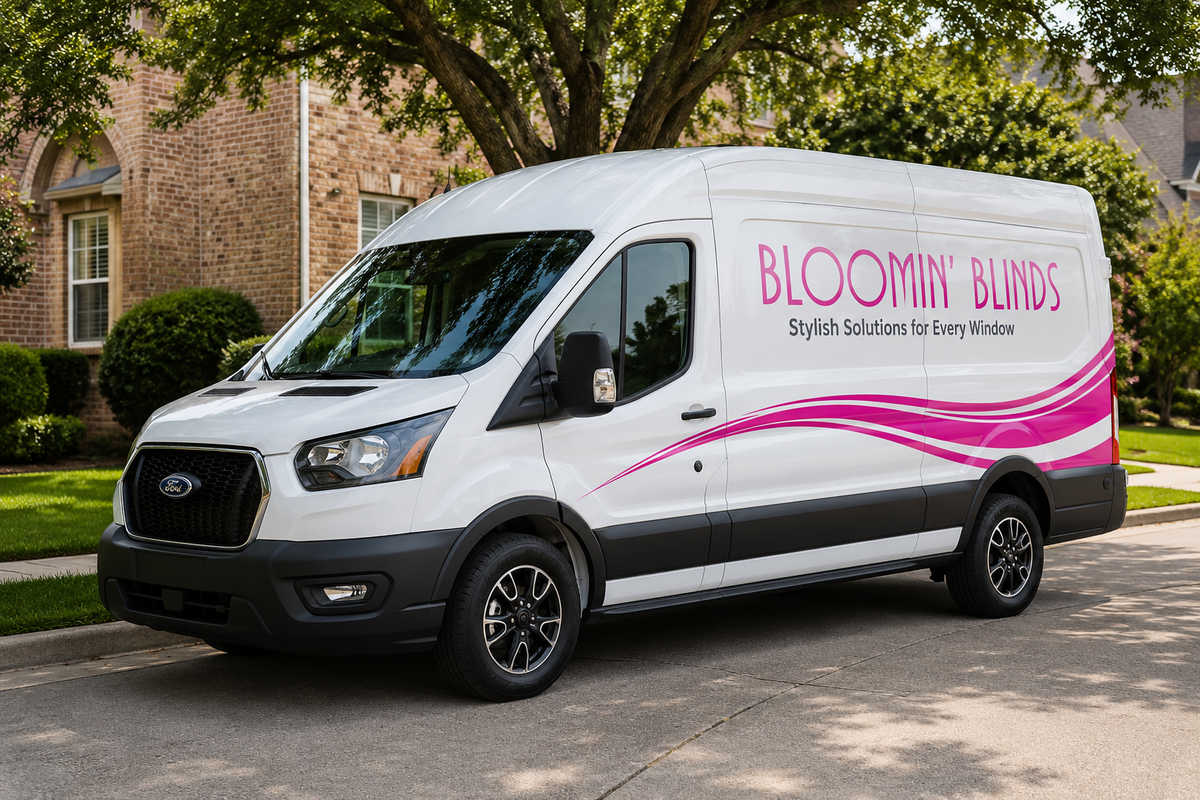
Bloomin' Blinds is a home-based, mobile window-coverings franchise: franchisees sell, install, and repair blinds, shades, shutters, draperies, and exterior shading products out of a branded van within a defined home territory. What diligence questions and review items should a prospective franchisee consider?
Bloomin' Blinds | Home Services | latest FDD 2025 | 141 outlets | franchising 11 years
Reviewer Highlights
Create an account at Franchise Signal and ask diligence questions within your Claude workspace - all with the added FDD data (across multiple years) for your prospective brand(s). Download FDDs directly for additional research.
About the franchisor
The franchisor is Bloomin Blinds Franchise Corp., a Texas corporation formed on June 12, 2014 and headquartered at 5360 Legacy Dr., Suite 155, Plano, Texas. It has offered franchises since 2014. The disclosure states the company has no parent, no predecessors, and no affiliates that have offered franchises or sold to franchisees, so the franchisee signs with and pays a single, founder-controlled entity rather than a holding company or private-equity platform.
The brand itself traces back to a family window-coverings business founded in 2001, more than a decade before the franchise was formed. The franchised business is home-based and mobile: each franchisee runs a branded van within a defined territory, selling, installing, and repairing interior window coverings (blinds, shades, shutters, draperies) and exterior shading products (solar shades, awnings, pergolas). An existing independent window-coverings business can convert to a Bloomin' Blinds franchise on modified terms.
Leadership turned over in 2024 and 2025 while staying largely in the founding family. Jeff Wharton became Chief Executive Officer in June 2024; he joined in February 2022 as Vice President of Franchise Operations and General Manager and previously ran the central U.S. region for Norman Window Fashions. Co-founder Kelsey Stuart, who was CEO from the company's formation in 2014 until June 2024, moved to Chief Development Officer. Co-founders Kristopher Stuart (Chief Innovation Officer since January 2025, previously Chief Operating Officer) and Kevin Stuart (Chief Technical Officer since 2014) remain in the C-suite, and Young Han has served as a fractional Chief Financial Officer since June 2024.
Growth and system health
Item 20 counts each territory as a separate outlet. Franchised territories grew from 61 at the start of 2022 to 85, then 109, then 141 at the end of 2024, on openings of 35, 40, and 44 over those three years. Across all three years the franchisor recorded zero terminations and zero non-renewals; every franchised closure is logged instead under "ceased operations for other reasons," at 11 in 2022, 16 in 2023, and 12 in 2024, which is about 18%, 19%, and 11% of the start-of-year franchised base.
Company-owned outlets fell from 9 to 4 in 2024 after the franchisor sold 5 to franchisees, leaving company outlets at about 2.8% of the 145-outlet total. The franchisor reported 6 agreements signed but not yet opened at year end and projects 49 new franchised outlets in the next fiscal year, up from the 39 it projected a year earlier. Item 20 also discloses that some current and former franchisees have signed confidentiality clauses limiting what they can say about their experience.
| Year | Opened | Terminations | Non-renewals | Reacquired | Ceased | Outlets (end) |
|---|---|---|---|---|---|---|
| 2022 | 35 | 0 | 0 | 0 | 11 | 85 |
| 2023 | 40 | 0 | 0 | 0 | 16 | 109 |
| 2024 | 44 | 0 | 0 | 0 | 12 | 141 |
Transfers of franchised outlets to new owners were 1 in 2022, 2 in 2023, and 0 in 2024, so resale activity in this system is minimal. With few transfers on record, there is little market signal yet on what an existing territory sells for or how readily it changes hands.
As of December 31, 2024 the franchisor reported 6 franchise agreements signed but not yet opened and projected 49 new franchised outlets in the next fiscal year, up from 39 projected in the 2024 FDD. Against a base of 141 franchised territories, a 49-outlet projection implies planned growth of about 35%, which is a forecast rather than a commitment.
What it costs to get in
Item 7 estimates a single Base Territory at $115,700 to $212,100, and the business is designed to be home-based, so the low end assumes no commercial space. The largest single variable is the vehicle: franchisees must run an approved white van (Sprinter, Ford Transit, or Ram ProMaster), estimated at $700 if financed with no money down up to $65,000 for a new purchase.
The other major fixed entries are the $49,500 initial franchise fee for a territory of up to 40,000 qualified households, a $30,000 start-up fee covering initial inventory, tools, a tablet, and a vehicle wrap, a $12,000 market introduction program, and a $20,000 to $40,000 reserve for the first three months.
The total rose from $105,700 to $182,100 in the 2024 FDD, driven by the higher vehicle estimate and a doubled three-month reserve. Buying multiple territories raises the all-in range to $165,700 to $615,600, a conversion of an existing window business runs $24,400 to $154,600, and the franchisor offers no financing (Item 10).
| Category | 2024 FDD | 2025 FDD |
|---|---|---|
| Initial Franchise Fee | $49,500 | $49,500 |
| Start-Up Fee | $30,000 | $30,000 |
| Market Introduction Program | $12,000 | $12,000 |
| Vehicle (approved white van) | $700 to $55,000 | $700 to $65,000 |
| Rent, Utilities, Leasehold Improvements | $0 to $5,000 | $0 to $5,000 |
| Insurance | $300 to $3,000 | $300 to $3,000 |
| Consumer Financing Subscription | $1,600 | $1,600 |
| Licenses and Permits | $0 to $1,500 | $0 to $1,500 |
| Professional Fees | $400 to $1,500 | $400 to $1,500 |
| Travel and Meals for Initial Training | $700 to $1,500 | $700 to $1,500 |
| Office Expenses | $500 to $1,000 | $500 to $1,000 |
| Furniture, Fixtures, and Equipment | $0 to $500 | $0 to $500 |
| Inventory | $0 | $0 |
| Additional Funds (first 3 months) | $10,000 to $20,000 | $20,000 to $40,000 |
| TOTAL | $105,700 to $182,100 | $115,700 to $212,100 |
Ongoing fees
Two recurring charges run on Total Sales rather than profit: a 6% royalty (or $600 per month, whichever is greater) and a 2% Brand Development Fund (or $300 per month).
On top of those, a local advertising minimum requires the greater of 2% of sales or $1,500 a month, and two flat fees apply regardless of volume: a $500 per month Technology Fee for the Bloomscale software and a $400 per month Customer Service Support Fee plus a per-call charge.
Those flat fees matter most at the low end: the bottom third of reporting outlets averaged $247,000 in Total Sales, where roughly $900 a month in fixed technology and support fees plus the percentage-based royalty, brand fund, and ad minimum push the all-in fee load toward the mid-teens as a share of sales.
There is also a Minimum Annual Total Sales standard ($80,000 in year 1, $120,000 in year 2, $150,000 after) with a shortfall royalty of 6% of any gap, so the percentage royalty effectively has a performance floor underneath it.
| Fee | Amount |
|---|---|
| Initial franchise fee | $50k |
| Royalty | 6.0% of Total Sales |
| Brand / ad fund | 2.0% of Total Sales |
| Royalty | Greater of 6% of Total Sales or $600 per month per territory; the $600 monthly minimum is waived during the first 12 months. A Conversion Franchise pays 2% for months 1 to 12, 4% for months 13 to 24, and 6% thereafter. |
| Brand Development Fund | Greater of 2% of Total Sales or $300 per month per territory |
| Technology Fee | $500 per month per business unit for the Bloomscale software and related services; may rise up to 30% a year on 30 days' notice |
| Customer Service Support Fee | $400 per month per territory plus $0.50 to $1.00 per call handled by the franchisor's customer service center |
| Local Advertising Requirement | You must spend at least the greater of 2% of Total Sales, $1,500 per month, or $0.0375 per qualified household on local marketing |
| Shortfall Royalty | If you miss the Minimum Annual Total Sales standard, 6% of the gap between actual and minimum sales for that year |
| Transfer Fee | $10,000 per territory plus broker and out-of-pocket costs |
| Breach of Territory Fee | Greater of $3,000 or 150% of the amount paid by a customer served inside another franchisee's territory |
| Liquidated Damages | Average monthly Royalty and Brand Development Fund over the last 12 months, times the lesser of 24 or months remaining in the term, on certain terminations |
Reported financial performance (Item 19)
Item 19 is worth reading closely. The franchisor reported actual 2024 Total Sales for 49 Operational Franchise Outlets (49 franchisees operating 83 territories) that were open the entire year, with an average of $577,019, a median of $400,282, and a range from $142,105 to $2,741,700, a spread of about 19 to 1.
Sorted into thirds, the top third averaged $1,081,430, the middle third $432,717, and the bottom third $225,928, so where a territory lands in the distribution matters more than the headline average. The franchisor also disclosed profit detail for 43 of those outlets: gross profit margins averaged in the high 40s to low 50s percent, and "Adjusted Earnings" averaged $123,064 (about 20% of average sales) with a median of $109,902, but the franchisor states this figure excludes the owner's pay, interest, taxes, and depreciation, so it is not net profit.
On coverage, the 83 reporting territories are about 58.9% of the 141 franchised territories at year end, and the disclosure deliberately leaves out the 49 territories that opened during 2024 and the 12 that closed, which means a brand-new buyer's most comparable peers are not in the sample.
Create an account at Franchise Signal and ask these types of questions within your Claude workspace - all with the added FDD data (across multiple years) for your prospective brand(s). Download FDDs directly for additional research.
Same-territory year-over-year change for units open through both 2023 and 2024 averaged +17.51% but had a median of only 6% and ran from +117% down to -33%, with several established territories declining. Treat these as real but partial results, remember that Total Sales is revenue and not profit, and if you are buying an existing territory, ask for that territory's own records.
| Annual Total Sales per full-year franchised outlet | 2023 | 2024 | Latest YoY |
|---|---|---|---|
| Average | $531K | $577K | +8.7% |
| Median | $432K | $400K | -7.4% |
Personal risk and the exit
The personal stakes are concrete for a business of this size. Every owner signs a personal guaranty (Item 1), so the $115,700 to $212,100 investment is not a risk that stops at the business entity.
The initial term is 7 years, with up to three 5-year successor terms available if the franchisee qualifies and signs the then-current agreement and a general release. The franchisor cannot terminate without cause, and the franchisee can terminate only if the franchisor materially breaches and fails to cure within 30 days.
Exiting early without that right triggers liquidated damages of up to 24 months of average royalty and brand-fund fees, about $64,000 at the median reported sales.
A non-compete bars the franchisee, any owner, and an owner's spouse from any competing window-coverings business during the term, and for two years afterward within 25 miles of the former territory or of any other Bloomin' Blinds territory. Two failures to hit the Minimum Annual Total Sales standard are a non-curable default. Disputes go to arbitration in Plano, Texas under Texas law, and the prevailing party recovers its legal costs.
The franchisor's financials (Item 21)
Item 21 of the FDD contains the franchisor's audited financial statements, which show the financial condition of Bloomin Blinds Franchise Corp., the entity a franchisee is bound to for the full term. Reviewing them is left to the reader and a qualified advisor. They are worth reading here for a specific reason: this is a founder-controlled company with no parent to backstop it and no franchisor financing, so a prospective buyer should look at the franchisor's revenue, equity, and cash position to judge whether it can fund the training, software, customer-service, and brand-development support the agreement promises over a 7-year term.
Diligence gaps
The Item 19 reporting rate is computed as the 83 reporting territories against 141 franchised territories at year end; the FDD uses "outlet" to mean a franchisee business in Item 19 (49 reporting) but a territory in Item 20 (141), so the rate depends on which unit is used as the denominator;
Cohort churn is distorted by rapid growth: 39 closures over 2022 to 2024 against a start-of-2022 base of 61 is 63.9%, but the base grew to 141 as 119 territories opened, so on a base-plus-openings denominator it is about 21.7%;
Item 20 reports annual flows, not true cohort survival; All franchised closures in 2022 to 2024 are recorded as "ceased operations for other reasons" with zero terminations and zero non-renewals, so the FDD does not distinguish voluntary exits from involuntary ones;
Understand the disclosures
Related FDD items
- Item 1 - The Franchisor and Any Parents, Predecessors, and Affiliates
- Item 2 - Business Experience
- Item 6 - Other Fees
- Item 7 - Estimated Initial Investment
- Item 12 - Territory
- Item 17 - Renewal, Termination, Transfer, and Dispute Resolution
- Item 19 - Financial Performance Representations
- Item 20 - Outlets and Franchisee Information
Questions worth asking
Bloomin' Blinds is a local service brand, not a name most customers walk in already knowing, so you are buying a system and a playbook rather than built-in demand. With company-owned outlets down to 4 of 145 and reported sales that look workable, it is fair to ask why the franchisor is selling territories to strangers rather than running more vans itself. The capital-light answer is reasonable, but it means you supply the van, the $115,700 to $212,100, and a personal guaranty, and you do the selling and installing.
How much weight should you put on the Item 19 numbers? They are real reported sales, which is a point in their favor, but they cover 83 of 141 territories and deliberately exclude every territory that opened or closed during 2024, which is exactly the group a brand-new owner most resembles. The median was $400,282 and the bottom third averaged $225,928, against a year-3 minimum sales standard of $150,000. What does the franchisor project for your specific market, and can you reach owners in the middle and bottom thirds, keeping in mind that some franchisees have signed confidentiality clauses?
Have you priced the exit as carefully as the entry? This is a 7-year commitment with a personal guaranty from every owner, a two-year 25-mile non-compete after you leave, and liquidated damages of up to 24 months of royalty and brand-fund fees, roughly $64,000 at the median reported sales, if you terminate early without the right to. Missing the minimum sales standard twice is a non-curable default. Run those figures against the income you are actually projecting, not the top-third numbers.
Are the ongoing fees sized for the territory you will actually run? Beyond the 6% royalty and 2% brand fund, you owe a $500 monthly technology fee, a $400 monthly customer-service fee plus per-call charges, and a local advertising minimum of at least $1,500 a month. At bottom-third sales near $247,000 those fixed and percentage fees together climb toward the mid-teens as a share of revenue. What is your honest first-year and second-year sales plan, and does it clear those fees plus your own pay?
Want to use this FDD data for reports, diligence, memos, comparisons, or ad-hoc analysis? Get started with the Franchise Signal MCP Connector and query multi-year franchise brand data directly in your Claude workspace.
Questions or want to connect? Request a demo.
It is important to note that nothing on this site is investment or legal advice. This site does not constitute full diligence in any way. You should reference the FDD(s) of any brand you are looking at. Franchise Signal may make mistakes. If you are actively considering investing in a franchise you should consult with a franchise attorney.

Comments ()