
Rolling Suds Franchise: Cost, Revenue, and Diligence (FDD 2026)
Why did Rolling Suds only disclose 39% of fully operational units in their Item 19 Financial Disclosures? A diligence report of the Rolling Suds pressure washing franchise from the 2026 FDD: investment range, Item 19 revenue, unit growth, fees, exit terms, and year-over-year updates.
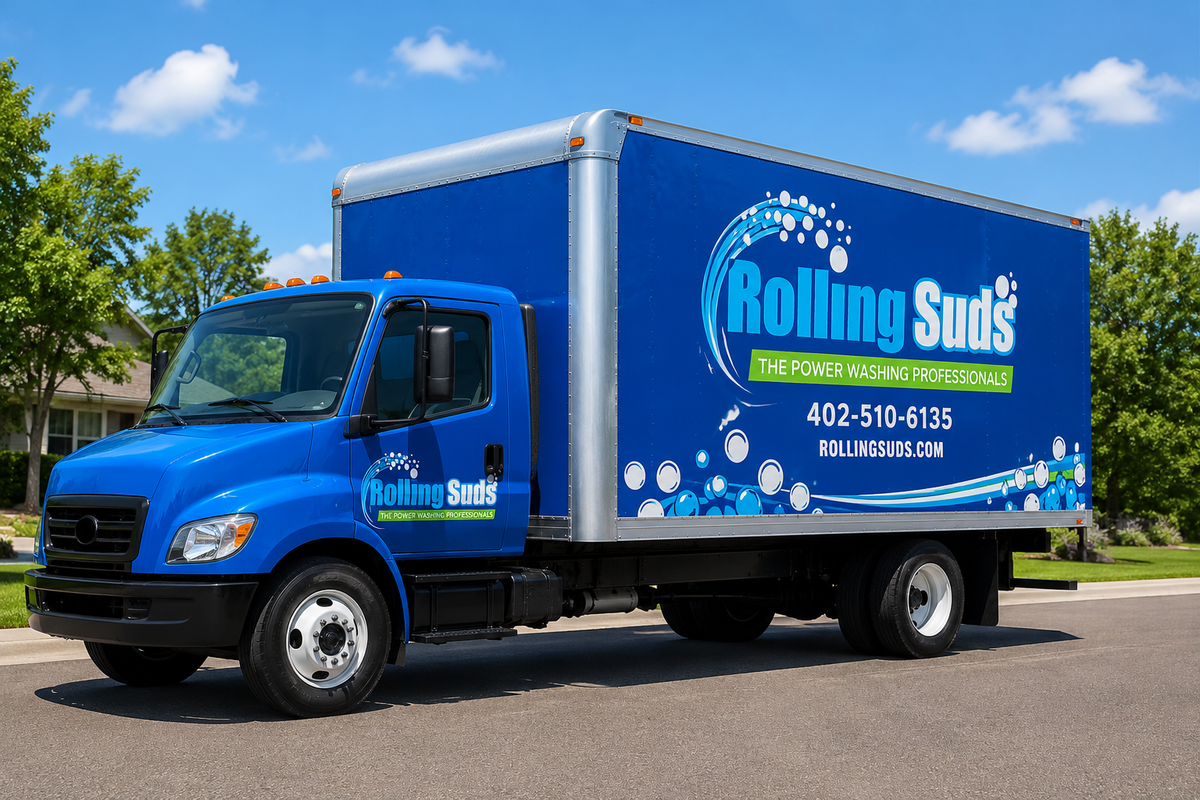
Rolling Suds is a mobile pressure washing and exterior cleaning franchise that began offering franchises in August 2022. The 2026 FDD covers a system that grew from 7 outlets at the end of 2023 to 134 franchised outlets (plus 1 affiliate-owned location) at the end of 2025, with zero terminations, non-renewals, or closures disclosed across that window. Item 19's reported 2025 average of $461,189 covers only 25 of the 64 outlets that operated all of 2025;
Rolling Suds | Cleaning & Maintenance | latest FDD 2026 | 135 outlets | franchising 4 years
Reviewer Highlights
About the franchisor
Rolling Suds Franchising, LLC began offering franchises in August 2022 and is based in Marietta, Georgia. The company sells exterior property maintenance services: low-pressure soft washing, pressure washing, concrete cleaning, window cleaning, gutter cleaning, kitchen vent hood cleaning, and truck and fleet washing. The original Rolling Suds business has operated as an independent service company in Warrington, Pennsylvania since 1990 under an affiliate, Rolling Suds, Inc., and remains in operation today. As of the 2026 FDD, Rolling Suds Franchising is a subsidiary of Rolling Suds Holdings, LLC, which in April 2026 became a subsidiary of a newly formed Delaware holding company, Big Picture Brands, LLC, owned by chairman and CEO David Barr and founder Aaron Harper. Item 1 calls Rolling Suds Franchising a Pennsylvania LLC formed on March 28, 2022; the Item 21 audited financial statements call the same entity a Tennessee LLC formed on April 15, 2022.
David Barr joined as Chairman and CEO in April 2026. He is the founder and chairman of PMTD Restaurants, LLC (a KFC and Taco Bell franchisee), a former chairman of the International Franchise Association, and a director at several other franchisors. Founder Aaron Harper served as CEO from December 2022 to June 2025, then as Chairman until April 2026, and is now Chief Growth Officer. Brian Wendling Sr., who founded the original Warrington business in 1990 and co-founded Rolling Suds Franchising in March 2021, remains involved through the affiliate. Other named officers include Brian Wendling Jr. (Vice President of National Accounts since May 2025), Evan Greco (Vice President of Franchise Development since September 2025 and co-owner of the New Orleans franchise location), James McGoldrick (Executive Vice President of Operations since September 2025), and Jessup Warnock (Chief Marketing Officer since February 2026). The 2026 FDD reflects a year of senior turnover, including the addition of a new CEO and a new parent entity in the same month.
Create an account at Franchise Signal and ask diligence questions within your Claude workspace - all with the added FDD data (across multiple years) for your prospective brand(s). Download FDDs directly for additional research.
Growth and system health
Rolling Suds began offering franchises in August 2022. The first 7 franchised outlets opened in 2023. The system added 57 more in 2024 to reach 64, then opened another 70 in 2025 to reach 134 franchised outlets at year-end. The affiliate-owned Warrington business is the only company-affiliated unit and operates in an area covering about 5 of the territory sizes Rolling Suds typically grants to franchisees.
Across 2023, 2024, and 2025, the Item 20 outlet tables disclose zero terminations, zero non-renewals, zero reacquisitions, and zero ceased operations. That is a clean record on paper, but most outlets have been open for less than two years and most of the system has not yet faced a renewal or burnout decision.
Outlet activity by year, broken out (openings against exits, not a net figure):
| Year | Opened | Terminations | Non-renewals | Reacquired | Ceased | Outlets (end) |
|---|---|---|---|---|---|---|
| 2023 | 7 | 0 | 0 | 0 | 0 | 7 |
| 2024 | 57 | 0 | 0 | 0 | 0 | 64 |
| 2025 | 70 | 0 | 0 | 0 | 0 | 134 |
Latest termination ratio (terminations plus non-renewals plus ceased operations, over outlets at the start of the year): 0.0%. Cumulative 3-year churn: 0.0% (cumulative terminations, non-renewals, and ceased operations across 2023 to 2025 (0) relative to the 7 franchised outlets at the start of the window)
Item 20 reports annual flows, not true cohort survival, and the window is short. Most outlets in this system are under two years old, which is earlier than the period when most failures or non-renewals tend to surface. Treat the zero closure record as a function of how recent the system is, not as a long-run survival figure.
Transfers of outlets from franchisees to new owners, by year:
Item 20 reports 7 transfers in 2024 (Florida, North Carolina, Oklahoma, Pennsylvania, and three in Texas) and zero transfers in 2023 and 2025. A transfer is an existing franchisee selling its outlet to a new owner. Seven transfers against a 7-to-64 outlet base in 2024 is a meaningful share for a single year; zero in 2025, against a 64-to-134 base, is also meaningful and points back to how young most of these outlets are.
| Year | Franchised | Company-owned |
|---|---|---|
| 2023 | 7 | 1 |
| 2024 | 64 | 2 |
| 2025 | 134 | 1 |
The Warrington, Pennsylvania business is operated by an affiliate, Rolling Suds, Inc., that predates the franchise system by more than 30 years. Item 20 shows 1 company/affiliate-owned outlet at the end of 2025, against 134 franchised outlets, so the system is operated almost entirely by franchisees. The affiliate-owned business covers roughly 5 of the territory sizes Rolling Suds typically grants to franchisees and contributes the multi-year revenue and EBITDA series presented in Item 19 Table 1.
The 2026 FDD discloses 187 franchise agreements signed for territories not yet open and 57 new outlets projected to open in the next fiscal year. A year earlier those figures were 177 signed and 63 projected, and the year before that 84 signed and 36 projected. The pipeline has continued to widen even as the projected next-year opening figure dropped from 63 to 57, and 70 outlets actually opened in 2025. A signed agreement that has not yet become an open outlet does not produce franchisee revenue and does not contribute to royalty income for the franchisor, so the gap between signings and openings is worth tracking across filings.
What it costs to get in
The 2026 FDD puts the total initial investment for a single territory at $211,150 to $299,250. The biggest single line is the down payment on a service vehicle, $22,000 to $70,000, with the high end including an optional hot-water machine. Other major components include the $54,900 initial franchise fee, the $30,000 Brand Launch Package, and $58,500 to $75,000 in additional funds (working capital for the first three months). A three-territory operator pays a $164,700 combined initial franchise fee ($54,900 each for the first three territories, $49,900 thereafter) and has a total estimated range of $329,585 to $431,650. There is a 10% veterans discount on the initial fee for the first two territories.
Estimates are for a single-territory operator with one service vehicle. A multi-territory operator pays an additional initial franchise fee per territory ($54,900 for the first three, then $49,900 each) and must add a service vehicle on the Vehicle Schedule (one additional vehicle per additional territory, on a 12-to-48 month delivery cadence). The three-territory example in Item 7 carries a total estimated range of $329,585 to $431,650.
Item 7 puts the total initial investment at $211k to $299k.
Full Item 7 cost categories, year over year:
| Category | 2025 | 2026 |
|---|---|---|
| Initial Franchise Fee | $54,900 | $54,900 |
| Training Expenses | $1,500 to $3,000 | $1,500 to $3,000 |
| Down Payment on Service Vehicle | $5,000 to $31,600 | $22,000 to $70,000 |
| Down Payment on Sales Vehicle | $0 to $3,500 | $0 to $3,500 |
| Brand Launch Package | $30,000 | $30,000 |
| Lease Deposit; First Month's Rent and Utilities | $4,000 to $8,000 | $10,000 to $15,000 |
| Leasehold Improvements | $0 to $1,000 | $0 to $1,000 |
| Business Licenses and Permits | $150 to $500 | $150 to $500 |
| Technology Systems | $100 to $1,200 | $100 to $1,200 |
| Shop Kit Inventory Package | $6,000 to $8,000 | $8,000 to $10,000 |
| Cleaning Solutions | $1,000 to $3,000 | $1,000 to $3,000 |
| Service Vehicle Payments (Three Months) | $8,000 to $9,000 | $8,000 to $9,000 |
| Sales Vehicle Payments (Three Months) | $0 to $1,650 | $0 to $1,650 |
| Professional Fees | $1,000 to $2,500 | $1,000 to $2,500 |
| Local Advertising (3 Months) | $7,500 | $7,500 |
| Grand Opening Advertising (3 Months) | $7,500 | $7,500 |
| Insurance | $1,000 to $4,000 | $1,000 to $4,000 |
| Additional Funds (3 Months) | $58,500 to $75,000 | $58,500 to $75,000 |
| TOTAL | $186,150 to $251,850 | $211,150 to $299,250 |
Across three FDDs the low end of the range moved from $159,650 (2024 FDD) to $186,150 (2025 FDD) to $211,150 (2026 FDD), and the high end from $255,600 to $251,850 to $299,250. The largest year-over-year move is in the service vehicle down payment, which the 2026 FDD ranges from $22,000 to $70,000 with the high end now including an optional hot-water machine. The 2024 FDD presented its line items under different names (Operating Expenses or Additional Funds for 3 months instead of Additional Funds, Your Training Expenses instead of Training Expenses, a separate Grand Opening line at $13,500 only). The 2025 and 2026 FDDs use the same set of category names, so the more useful comparison is from 2025 to 2026.
Create an account at Franchise Signal and ask these questions within your Claude workspace - all with the added FDD data (across multiple years) for your prospective brand(s). Download FDDs directly for additional research.
Total investment midpoint over time:
Ongoing fees
Royalty is the greater of 8% of Gross Revenue or a Minimum Royalty that ramps with the age of the franchise. Gross Revenue means everything the franchise collects, not profit, so royalty and the 2% Brand Fund are owed in slow months too. The local advertising requirement, $2,500 per territory per month at the floor, is in addition to those fees and is paid to outside vendors. Once the franchise is in its second year, the Minimum Royalty kicks in at $1,200 per month for a single territory, which on annualized 8% royalty is the equivalent of about $180,000 in Gross Revenue regardless of whether the franchise actually generated that much.
| Fee | Amount |
|---|---|
| Initial franchise fee | $55k |
| Royalty | 8.0% of Gross Revenue |
| Brand / ad fund | 2.0% of Gross Revenue |
| Minimum Royalty (single territory) | $0 in months 1 to 12, then ramps from $1,200 per month (months 13 to 24) to $2,720 per month at month 109 and after; paid in place of the 8% royalty whenever it is the larger figure |
| Local Advertising Requirement | the greater of 4% of Gross Revenue or $2,500 per territory per month, paid to approved vendors |
| Minimum Brand Fund Contribution (single territory) | ramps from $300 per month (months 13 to 24) to $680 per month at month 109 and after, paid in place of the 2% Brand Fund whenever it is the larger figure |
| Technology Fee | $650 per month |
| Primary Website Fee | $150 per month |
| Search Engine Optimization (SEO) Fee | $150 per month |
| Business Phone Fee | $36.99 per month |
| Bookkeeping Services Fee (if used) | up to $400 per month |
| Annual Convention | up to $950 per person, due whether you attend or not |
| Successor Agreement Fee (at renewal) | $5,000 |
| Transfer Fee | $10,000 |
Reported financial performance (Item 19)
Item 19 in the 2026 FDD has two parts. Table 1 reports 6 years of revenue and EBITDA for the affiliate-owned Warrington, Pennsylvania business, an independent service company that has operated since 1990 and that covers roughly 5 of the territory sizes the franchisor grants to franchisees today. Table 2 reports a single year of revenue for the 25 franchised outlets that were open for the entirety of 2025 and reported revenue in every month of the year. For those 25 outlets, average 2025 revenue was $461,189, median $324,973, top one-third average $831,749, bottom one-third average $193,334, with a range from $92,837 to $1,406,102. Table 2.B is a subset: the 5 of those 25 outlets that also reported every month of 2024, where average revenue rose from $477,114 in year one to $609,681 in year two. The 25 disclosed represent 39% of the 64 franchised outlets open for the entirety of 2025, and 19% of the 134 franchised outlets at year-end.
Average annual revenue, 25 Reporting Franchised Outlets (2025): $461k (sample size: 25 units of 64, a 39.1% reporting rate)
Methodology as disclosed: Aggregate revenue for the 25 franchised outlets defined in Item 19 as having been open for the entirety of the 2025 calendar year AND reported revenue in every month of 2025. Average $461,189, median $324,973, maximum $1,406,102, minimum $92,837. Top one-third average $831,749, middle one-third average $324,973, bottom one-third average $193,334. The 64-outlet eligible pool is the franchised outlets open at the start of 2025; none closed during the year. Outlets that opened during 2025 are not eligible. Where one franchisee operated more than one outlet under common ownership, those outlets were combined into one observation. Note 8 to Item 19 separately characterizes the cohort as outlets that 'completed their first full calendar year of operation on December 31, 2025'; that wording conflicts with the defined term in the Item 19 intro and with Table 2.B (5 outlets in their second full year), so the broader Item 19 definition is used here.
Across filings: The Item 19 structure carries forward from earlier filings, with the same affiliate-owned business in Table 1 and a reporting cohort of franchised outlets in Table 2. The franchised reporter count grew from 5 in the 2025 FDD (covering 2024) to 25 in the 2026 FDD (covering 2025), driven by the much larger system the 2026 filing reports against.
Item 19 reports revenue, not profit, and the FDD does not disclose franchisee-level cost structure, so a return on investment or payback period cannot be computed from Item 19 alone. The affiliate-owned per-vehicle EBITDA series in Table 1.B describes the franchisor's affiliate, which has operated since 1990, in its home market, and does not pay royalties to the franchisor; it is not a forecast for a new franchisee.
Personal risk and the exit
Item 17 imposes a 24-month post-term non-compete: for two years after the franchise ends, the franchisee and its principals cannot operate or participate in any residential or commercial power washing business within 50 miles of the territory or within 50 miles of any Rolling Suds office location. The term is 10 years with a single 10-year renewal, with a $5,000 successor agreement fee at renewal and the requirement to sign the then-current Franchise Agreement, which may have materially different terms. Disputes go to non-binding mediation at the franchisor's headquarters and then binding arbitration, at the franchisor's option, under Pennsylvania law.
Personal guarantee: Item 17 does not separately disclose a personal guarantee, but the Franchise Agreement and its attachments (Item 22 / Exhibit B) typically carry a guarantee from the franchisee's owners. Confirm the exact terms in the Franchise Agreement before signing.
Liquidated damages: Item 6 sets post-termination liquidated damages at the average weekly Royalty Fee plus Brand Fund Contribution from the prior 12 months, multiplied by the lesser of 36 months or the months remaining in the term. They are owed when the franchisor terminates the Franchise Agreement on account of franchisee default.
Transfer restrictions: Item 17 requires the franchisor's consent to transfer (which it states will not be unreasonably withheld). Conditions include franchisor's right of first refusal (15 days), the transferee qualifying under then-current standards and signing the then-current Franchise Agreement (which may have materially different terms), completion of training, payment of all amounts owed, signing a general release, and a $10,000 transfer fee.
Estimated liquidated-damages exposure: $138k. At the 2025 franchised cohort average revenue of $461,189, an 8% royalty plus 2% Brand Fund equals about $46,119 a year (combined 10%), or roughly $3,843 a month. Over the 36-month cap that is about $138,357. At the 2025 median revenue of $324,973 the same formula is about $97,491. At the Top-Third 2025 average of $831,749 it is about $249,525. At the implied system-wide average of about $165,000 it is about $49,500. These are estimates from disclosed averages; the Franchise Agreement also includes attorneys' fees and other recoverable costs, so liquidated damages are not the only exit cost.
Litigation
Item 3 of the 2026 FDD states that no litigation is required to be disclosed. Item 4 (bankruptcy) likewise discloses none. Item 3 captures certain administrative, civil, arbitration, and criminal proceedings against the franchisor and its officers and directors over a defined look-back period and within a defined materiality threshold; it does not include every dispute. The Item 21 audited financial statement footnotes are where any proceedings outside Item 3's scope would appear, and reviewing them directly is part of standard diligence.
A young system
Rolling Suds began offering franchises in August 2022. Most franchised outlets in the system have been open for less than two years. Service businesses can take several years to settle into the unit economics that show up in mature filings, and renewal, transfer, and non-renewal data typically does not become informative until a system has run through a meaningful share of its first 10-year terms. The 36-year-old affiliate-owned Warrington, Pennsylvania business in Item 19 Table 1 is a separate, mature operation in its home market and is not a stand-in for the early-cohort experience of a new franchisee.
Changes since the prior FDD
Across the 2024, 2025, and 2026 FDDs the system grew from 7 to 64 to 134 franchised outlets, the Item 7 low rose from $159,650 to $186,150 to $211,150, and the high rose from $255,600 to $251,850 to $299,250. The biggest single line-item move was the service vehicle down payment, which the 2026 FDD ranges from $22,000 to $70,000 and now flags an optional hot-water add-on at the high end. In Item 20, transfers were 0 in 2023, 7 in 2024, and 0 in 2025. The Item 19 franchised reporter count widened from 5 outlets in the 2025 FDD to 25 in the 2026 FDD, against a 64-outlet eligible pool (the franchised outlets open all of 2025), and the disclosed average revenue moved from $419,193 (5 outlets) to $461,189 (25 outlets), median $324,973. Item 21 reports two consecutive years of net losses (2024 and 2025), a member equity deficit growing from ($556,226) to ($1,472,016), cash falling from $1.48M to $735,880, and continued distributions to the sole member ($1,184,438 in 2024 and $275,000 in 2025). Leadership changes in late 2025 and April 2026 added a new CEO (David Barr), a new CMO (Jessup Warnock), a new Executive Vice President of Operations, a new Vice President of Franchise Development, and a new parent entity, Big Picture Brands, LLC, formed in April 2026 and owned by the chairman and the founder.
Understand the disclosures
Related FDD items
- Item 1 - The Franchisor and Any Parents, Predecessors, and Affiliates
- Item 2 - Business Experience
- Item 3 - Litigation
- Item 5 - Initial Fees
- Item 6 - Other Fees
- Item 7 - Estimated Initial Investment
- Item 17 - Renewal, Termination, Transfer, and Dispute Resolution
- Item 19 - Financial Performance Representations
- Item 20 - Outlets and Franchisee Information
- Item 21 - Financial Statements
Questions worth asking
Rolling Suds discloses more granular Item 19 data than many young systems do, including separate top, middle, and bottom thirds for the 2025 franchised cohort. The harder questions sit at the seams between Item 19 and Item 21, and in the franchisor's own balance sheet.
Item 21 reports $1,311,074 of royalty income for 2025, which at the 8% rate implies system-wide franchisee Gross Revenue of about $16.4M across roughly 99 outlet-years. The Item 19 Table 2.A cohort of 25 outlets averages $461,189 and accounts for about $11.5M of that on its own. What did the other ~74 outlet-years actually produce, and on what basis were 39 of the 64 outlets open all of 2025 excluded from Table 2.A when royalty is drawn from every franchisee weekly by ACH?
Want to use this FDD data for reports, diligence, memos, comparisons, or ad-hoc analysis? Get started with the Franchise Signal MCP Connector and query multi-year franchise brand data directly in your Claude workspace.
Questions or want to connect? Request a demo.
It is important to note that nothing on this site is investment or legal advice. This site does not constitute full diligence in any way. You should reference the FDD(s) of any brand you are looking at. Franchise Signal may make mistakes. If you are actively considering investing in a franchise you should consult with a franchise attorney.

Comments ()