
Auntie Anne's Franchise: Cost, Sales, Diligence (FDD 2026)
A year-over-year summary and diligence report of the Auntie Anne's franchise from the 2026 FDD.
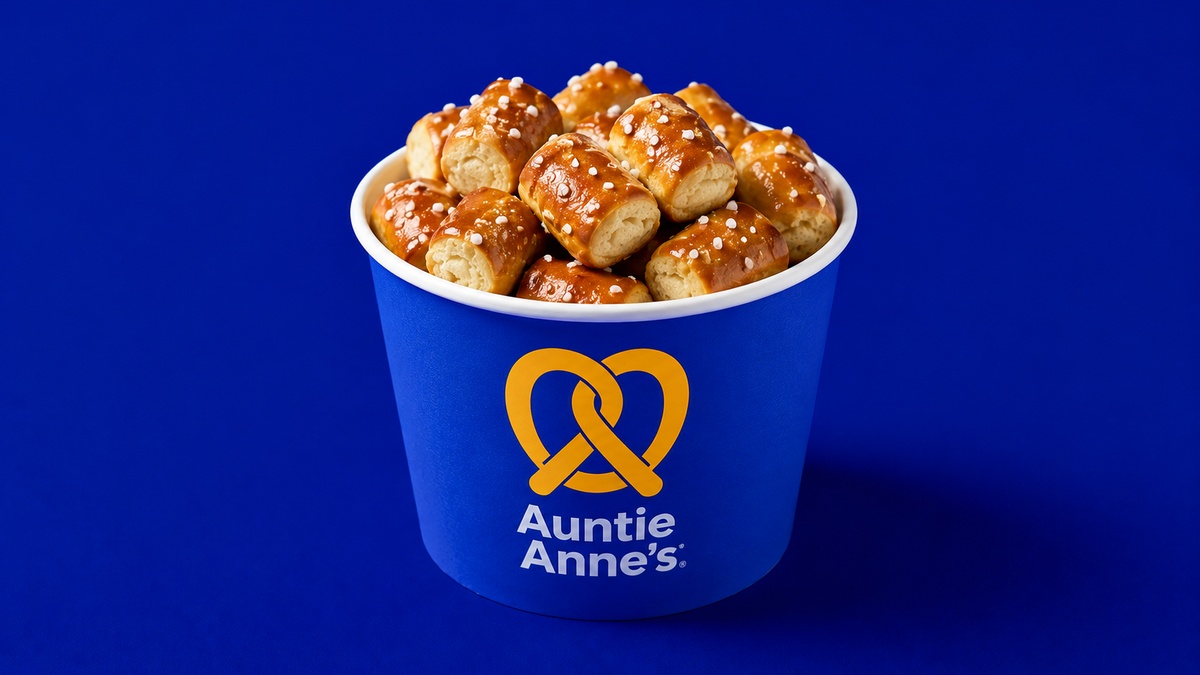
Auntie Anne's is a soft-pretzel franchise owned by GoTo Foods (formerly Focus Brands), a seven-brand portfolio controlled by Roark Capital. The 2026 Franchise Disclosure Document (FDD), covering the fiscal year ended December 28, 2025, reports 1,236 franchised Shops in the United States plus 11 affiliate-owned Shops, with franchised openings rising from 37 in 2021 to 92 in 2025.
Auntie Anne's | Food & Beverage | latest FDD 2026 | 1236 outlets | franchising 35 years
Reviewer Highlights
About the franchisor
Auntie Anne's sells franchises to operate Shops that bake and sell soft pretzels, pretzel products, lemonade, and related snacks in high-traffic venues such as enclosed malls, outlet centers, airports, travel plazas, stadiums, and other retail and non-traditional locations, in formats that include Full Shops, Concession Shops (food trucks and trailers), and Cinnabon or Jamba co-branded Shops.
The franchisor is Auntie Anne's Franchisor SPV LLC, a Delaware entity organized in 2017 that has offered franchises since April 2017; its predecessor, Auntie Anne's LLC, offered franchises from 1991 and still operates 11 affiliate-owned Shops. The franchisor is an indirect, wholly owned subsidiary of GoTo Foods LLC, formerly Focus Brands LLC, which is the parent of seven franchise systems (Auntie Anne's, Carvel, Cinnabon, Schlotzsky's, Moe's, Jamba, and McAlister's) and is controlled by Roark Capital. Supply chain, gift cards, and franchisee support run through GoTo Foods affiliates (GoTo Supply, GoTo Rewards, and GoTo Foods itself under a management agreement), and GoTo Foods Systems LLC guarantees the franchisor's obligations.
Create an account at Franchise Signal and ask diligence questions within your Claude workspace - all with the added FDD data (across multiple years) for your prospective brand(s). Download FDDs directly for additional research.
Item 2 reflects recent turnover at the top. Omer Gajial became Chief Executive Officer of the franchisor and of GoTo Foods and its portfolio brands in December 2025, after senior roles at Albertsons. Brett Ubl became Chief Financial Officer in February 2026, after serving as a Principal at Roark Capital Management. The senior team is shared across all seven GoTo Foods brands rather than dedicated to Auntie Anne's, with several leaders in strategic operations, training, and international channels based at the Atlanta headquarters.
Growth and system health
Item 20 shows a large, mature system that is growing again after a flat early-decade stretch. U.S. franchised Shops moved from 1,140 at the start of 2021 to 1,236 at the end of 2025, with annual openings accelerating from 37 (2021) to 48, 58, 75, and 92 (2025). Terminations have stayed in a narrow band: 51 in 2021, then 39, 30, 41, and 35, which against the start-of-year base works out to roughly 3.0% to 4.5% a year, plus a handful of non-renewals (0 to 8 a year). The 11 affiliate-owned Shops were unchanged across the period, so the system is essentially all-franchised. Transfers, where one owner sells to another, rose over 2023 to 2025, visible in the larger states (California went from 2 to 17, Texas from 3 to 19, and Georgia from 0 to 10 over those three years); a rise in resale activity is worth noting because it can signal owners choosing to exit even while unit counts grow.
| Year | Opened | Terminations | Non-renewals | Reacquired | Ceased | Outlets (end) |
|---|---|---|---|---|---|---|
| 2021 | 37 | 51 | 0 | 0 | 0 | 1126 |
| 2022 | 48 | 39 | 0 | 0 | 0 | 1135 |
| 2023 | 58 | 30 | 7 | 0 | 0 | 1156 |
| 2024 | 75 | 41 | 8 | 0 | 0 | 1182 |
| 2025 | 92 | 35 | 3 | 0 | 0 | 1236 |
The U.S. system is effectively all-franchised: 1,236 franchised Shops against 11 affiliate-owned Shops (under 1%) at the end of 2025. The franchisor states it owns no Shops directly; the 11 affiliate-owned Shops are held by Auntie Anne's LLC, the predecessor entity. Item 19 explicitly excludes affiliate-owned Shops from its tables.
The 2026 FDD reports 290 franchise agreements signed but not yet open and projects 100 new franchised U.S. Shops in the next fiscal year (and 0 company-owned). The signed-but-unopened figure has risen each year (244 in the 2024 FDD, 285 in 2025, 290 in 2026), and projected openings have moved from 58 to 91 to 100, against actual openings of 75 in 2024 and 92 in 2025.
What it costs to get in
Item 7 of the 2026 FDD gives five format-specific estimates. The standard, single-brand Full Shop, about 800 square feet in a high-traffic retail or mall space, runs $157,795 to $835,500.
Create an account at Franchise Signal and ask these questions within your Claude workspace - all with the added FDD data (across multiple years) for your prospective brand(s). Download FDDs directly for additional research.
The two Concession formats are lower (a food truck is $118,225 to $279,100 and a trailer is $115,225 to $261,800), while the co-branded formats are higher because they carry a second franchise fee and a larger build (Cinnabon Co-Branded is $410,675 to $1,205,400 and Jamba Co-Branded, which assumes a drive-thru endcap, is $472,375 to $1,811,400).
For the Full Shop, the largest line items are Construction and Build Out ($28,620 to $452,200, shown net of an estimated tenant-improvement allowance), the Equipment Package ($25,000 to $65,000), the $35,500 Initial Franchise Fee, and three months of Additional Funds ($15,000 to $54,000).
The Full Shop range has been stable at the low end across filings ($149,625 in 2024, $156,175 in 2025, $157,795 in 2026) but its high end rose to $835,500 in 2026 as the construction high climbed from $260,000 to $452,200.
| Category | 2026 |
|---|---|
| Initial Franchise Fee | $35,500 |
| Construction and Build Out Costs | $28,620 to $452,200 |
| Equipment Package | $25,000 to $65,000 |
| Millwork | $5,000 to $28,000 |
| Menu Board, Graphics, and Interior Signage | $250 to $23,000 |
| Computer System | $10,500 to $32,000 |
| Architect/Engineer | $2,000 to $20,000 |
| Misc. Opening Costs/Office Supplies | $13,000 to $25,000 |
| Rent (one month) | $2,000 to $15,000 |
| Security Deposits | $0 to $15,000 |
| Legal and Accounting Fees | $5,000 to $10,000 |
| Permitting | $450 to $8,300 |
| Exterior Signage | $3,000 to $8,300 |
| Insurance | $1,575 to $8,200 |
| Smallwares | $1,000 to $8,000 |
| Grand Opening Marketing | $3,000 to $7,500 |
| Travel and Living Expenses during Training | $3,600 to $5,700 |
| On-Site Training Fee | $0 to $5,300 |
| Opening Inventory | $3,300 to $4,000 |
| Management Training Program Fee | $0 to $3,000 |
| Furniture | $0 to $2,500 |
| Additional Funds - 3 Months | $15,000 to $54,000 |
| TOTAL (Full Shop) | $157,795 to $835,500 |
Ongoing fees
Ongoing fees run on Net Sales, not profit. The Royalty Fee is currently 7% of Net Sales and can be raised to 8% at the franchisor's sole discretion. On top of that sit a 2% Advertising Contribution (3% streetside) and a Local Marketing Obligation of at least 1% of Net Sales per quarter, with advertising and local marketing combined capped at 5%, so a typical Shop carries close to 10% of Net Sales in royalty plus required advertising.
Net Sales is defined broadly and includes the full menu price on third-party delivery orders (Uber Eats, DoorDash, and the like) without deducting the platform's commission.
The Initial Franchise Fee is $35,500 for a Full Shop, $10,500 for a Concession Shop, and $71,000 for a Cinnabon or Jamba co-branded Shop (half paid to the co-brand); qualifying veterans pay $20,000, and during 2025 franchisees actually paid initial fees of $5,250 to $28,500 under discount programs.
| Fee | Amount |
|---|---|
| Initial franchise fee | $36k to $71k |
| Royalty | 7.0% of Net Sales |
| Brand / ad fund | 2.0% of Net Sales |
| Royalty Fee | Currently 7% of Net Sales for most Shops, which the franchisor may increase in its sole discretion to 8%. Co-branded Shops split the royalty between Auntie Anne's (7% to 8% on the Auntie Anne's portion) and the co-brand (6% to 7%). Paid weekly. |
| Advertising Contribution | Currently 2% of Net Sales for Other Locations (3% for Streetside Locations), paid to the Ad Fund. May be increased, but the Advertising Contribution and Local Marketing Obligation combined may not exceed 5% of Net Sales. |
| Local Marketing Obligation | At least 1% of Net Sales each calendar quarter on local advertising; the franchisor may set the minimum and change it on 60 days' notice, within the combined 5% cap. |
| Advertising Cooperative Contribution | An amount set by the local advertising cooperative, where one exists. |
| Transfer Fee | 50% of the then-current Initial Franchise Fee for a transfer that changes control of the franchisee. |
| Renewal Fee | 20% of the then-current Initial Franchise Fee, due before signing the renewal agreement. |
| Reinstatement Fee | 10% of the then-current Initial Franchise Fee plus the Royalty Fees that would have been payable between termination and reinstatement. |
| De-identification Fee | The franchisor's actual costs plus interest and a 15% administrative fee, if it must de-identify a Shop after termination. |
| Late Reporting Fee | Currently $50 per week for late, incomplete, or inaccurate reports. |
| Interest on overdue amounts | The lesser of 1.5% per month or the maximum legal rate. |
| Plan Review / Construction Inspection Fees | $2,500 for additional plan-review sets beyond the included reviews, and $2,500 for a second or later on-site construction inspection. |
| Management Training Program Fee | Free for the first two Shops; $3,000 ($4,000 for co-branded) for the third and later Shops, plus $250 per additional trainee per day. |
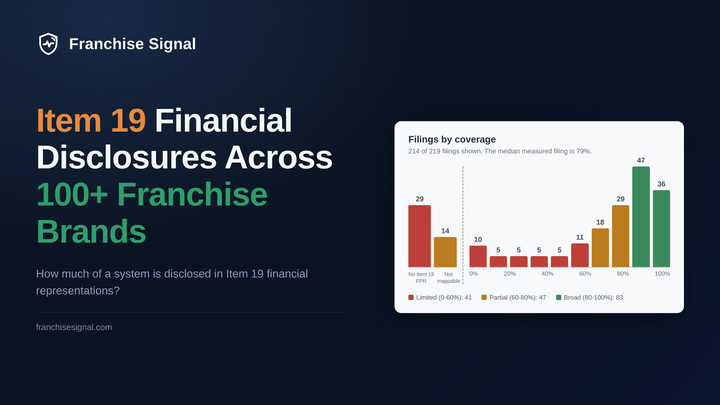
Reported financial performance (Item 19)
Item 19 of the 2026 FDD reports Net Sales for Fiscal Year 2025 (ended December 28, 2025), broken into four venue cohorts and four quartiles each, for franchises that reported sales in all 52 weeks.
Enclosed Mall Franchises (489 of 561, 87.2%) averaged $792,496 with a median of $732,705 and a range of $103,731 to $2,939,851;
Outlet Center Franchises (93 of 122, 76.2%) averaged $958,966;
Airport Franchises (37 of 51, 72.5%) averaged $1,705,205 with a high of $4,061,590;
Cinnabon Co-Branded Franchises (64 of 69, 92.8%) averaged $1,208,741, a figure that includes both Auntie Anne's and Cinnabon product sales.
Those four tables represent 683 Shops, about 55% of the 1,236 U.S. franchised Shops, and they exclude Concession Shops, non-Cinnabon co-brands, and Full Shops in every other location type (street, travel plazas, universities, casinos, big-box and Walmart sites, and more), so a buyer outside those four venue types has no figures to anchor to in this FDD.
Across the three available filings the enclosed-mall average held roughly flat ($768,870 for FY2023, $762,534 for FY2024, $792,496 for FY2025), while the reporting cohort shifts each year, so the trend is directional rather than a same-store comparison. The franchisor states the figures are unaudited and drawn from franchisee-submitted reports, and Item 19 discloses Net Sales only: it reflects no cost of goods, labor, rent, or other expense, so it is revenue, not profit, and supports no payback estimate.
Personal risk and the exit
The initial term is 20 years for a Full Shop (10 years for a Concession Shop), longer than the 10-year term common in franchising, with one 20-year renewal and no listed franchisee right to terminate early. Owners personally guarantee the agreement.
On termination the franchisee must pay all liquidated damages due, though no formula or amount appears in Items 6 or 17, so the exit cost cannot be quantified from these items and must be read in the Franchise Agreement.
A post-term non-compete runs 24 months at the location, within 3 miles of the location, and within 3 miles of any Auntie Anne's Shop, and the franchisor holds a right of first refusal and an option to buy the Shop's goods at fair market value. Most disputes go to arbitration in the Atlanta area under Georgia law, except non-compete disputes, which are governed by the law of the Shop's state. Because the term is 20 years and the fee load runs on Net Sales, the commitment is long and the cost to exit is governed by the contract rather than the market.
Understand the disclosures
Related FDD items
- Item 1 - The Franchisor and Any Parents, Predecessors, and Affiliates
- Item 2 - Business Experience
- Item 3 - Litigation
- Item 6 - Other Fees
- Item 7 - Estimated Initial Investment
- Item 17 - Renewal, Termination, Transfer, and Dispute Resolution
- Item 19 - Financial Performance Representations
- Item 20 - Outlets and Franchisee Information
Questions worth asking
Item 19 reports Net Sales for 683 of the 1,236 U.S. franchised Shops, and only for four venue types: enclosed malls, outlet centers, airports, and Cinnabon co-brands. If your planned location is a street shop, a travel plaza, a university, a casino, a big-box store, or a concession trailer, the FDD gives you no figures at all. Which venue are you actually buying into, and have you asked the franchisor and several current operators in that exact format what their Net Sales and costs look like?
The cost to open ranges from about $115,000 for a concession trailer to more than $1.8 million for a Jamba co-branded shop, and a quoted 'Auntie Anne's franchise cost' can mean very different things. For the format you want, what is the realistic all-in number, and how does it square against the Net Sales for that same format rather than the mall average that gets quoted most often?
Everyone recognizes the Auntie Anne's name, which is part of what you are paying for, but the fee load is heavy: a 7% royalty that can be raised to 8% at the franchisor's discretion, plus 2% to 3% advertising and at least 1% local marketing, all on Net Sales rather than profit, and including the full menu price on delivery orders before the delivery app takes its cut. At the bottom-quartile mall average of about $385,000, those fees run roughly $35,000 a year before rent, labor, or food cost. How does that pencil out for the location and format you are considering?
Want to use this FDD data for reports, diligence, memos, comparisons, or ad-hoc analysis? Get started with the Franchise Signal MCP Connector and query multi-year franchise brand data directly in your Claude workspace.
Questions or want to connect? Request a demo.
It is important to note that nothing on this site is investment or legal advice. This site does not constitute full diligence in any way. You should reference the FDD(s) of any brand you are looking at. Franchise Signal may make mistakes. If you are actively considering investing in a franchise you should consult with a franchise attorney.
Comments ()